Best Marine Fiberglass Composite Panels for Durable Boat Construction and Repairs
Answer: Marine fiberglass composite panels deliver lightweight strength, rot resistance, and easy workability for boat transoms, decks, and hatches. This guide highlights top panels suited for different boat-building and repair needs, from ultra-lightweight cores to rugged structural boards. Best for: builders and DIYers seeking rot-resistant, dimension-stable panels that perform in hulls, decks, and marine interiors. Below is a quick buying table, followed by detailed product insights.
| Product | Best For | Key Benefit |
|---|---|---|
| G10 FR4 300x335x2.0mm Epoxy Fiberglass Composite Sheet | Lightweight structural panels | High insulation and flame resistance |
| Coosa Nautical 15 Series 3/4” x 2’ x 4’ | Transom, decking, and high-load areas | Non-rot, mold-resistant core with fiberglass reinforcement |
| Coosa Bluewater 26 1/2” x 2’ x 4’ | Lightweight marine panels | Excellent load capacity with rot resistance |
| Coosa 3/4” x 4’ x 8’ | Large, rigid panels for structural sections | Ultra-lightweight and strong |
| Nautical 15 Series 1/2” x 2’ x 4’ | Smaller transom and deck patches | No-rot option with stable dimensions |
G10 FR4 300X335X2.0MM Epoxy Fiberglass Composite Sheet Panel

The G10 epoxy fiberglass sheet is a high-strength, lightweight option designed for demanding marine applications. With robust mechanical properties, it shows high resistance to flame, heat, and arcing. The material also acts as an effective insulator, making it suitable for electronics enclosures or engine compartments where heat management matters. Best for: boat builders and repairers needing a compact, rigid panel for panels, gussets, or small structural components. Better for projects where insulation and flame resistance are priorities. Caution: G10 can be more brittle than thicker composite cores in highly flexural applications.
Fiberglass Supply Depot Coosa Nautical 15 Series 1/2” x 2’ x 4’

This Nautical 15 Series panel combines continuous strand fiberglass reinforcement with a closed-cell high-density polyurethane foam core. Its fiberglass exterior helps resist mold growth, making it a no-rot option. Coosa panels maintain their dimensions in varying temperatures and humidity, minimizing distortion. Best for: transoms, decks, and other areas where dimensional stability and mold resistance are critical. Limitation: a thicker or higher-density option may be preferred for extreme load-bearing sections.
Fiberglass Supply Depot Coosa Nautical 15 Series Composite Board – 3/4” x 2’ x 4’

This 3/4” Coosa panel extends the same no-rot, dimension-stable characteristics with greater thickness for higher load-bearing applications. It maintains its shape under temperature changes and resists moisture, reducing maintenance needs in saltwater environments. Best for: bulkheads, larger deck sections, or structural reinforcements where additional thickness improves stiffness. Caution: heavier than 1/2” variants, which may affect handling and installation time.
Fiberglass Supply Depot Coosa Bluewater 26 1/2” x 2’ x 4’

The Bluewater 26 panel emphasizes superior strength and durability while remaining lightweight for easier handling. It resists water absorption and rot, a key marine advantage, and provides good load capacity for deck cores, hatches, and reinforcing ribs. Best for: installations where weight savings and long-term resistance to moisture are essential. Limitation: performance benefits rely on proper adhesion and sealing to prevent water ingress at joints.
Coosa Board 3/4 inch 4’x8′ – Bluewater 26 Composite Panel

This 3/4” Coosa panel offers superior structural strength with fiberglass reinforcement and a high-density polyurethane foam core. It is 100% non-absorbent, rot-free, and designed to replace plywood in marine settings. Best for: bulk framing, stringers, and large hull sections where rigidity combined with low weight matters. Caution: larger sheets require careful handling to avoid damage during transport and installation.
335x300x1mm Fiberglass G10 Composite Laminate Sheet Panel 13×11.8 (Black)

G10 epoxy fiberglass laminate sheets are built to last in harsh conditions. They offer high durability and a favorable weight-to-strength ratio, suitable for aerospace, marine, and industrial uses. Best for: lightweight structural skins, housings, or electronic insulation panels where durability and weight savings are needed. Limitation: color may be limited to pre-finished options; painting or coating considerations apply for exposed surfaces.
335x300x1.5mm Fiberglass G10 Composite Laminate Sheet Panel 13×11.8 (Yellow)
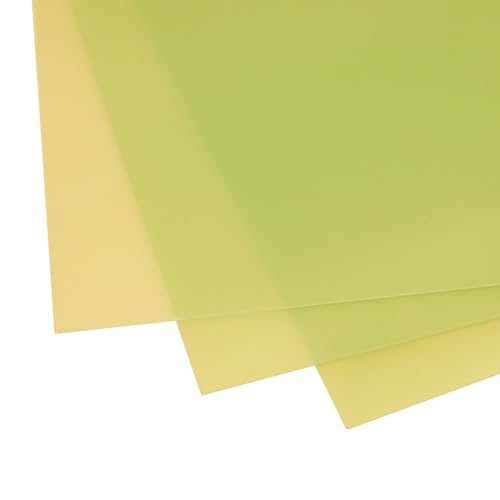
Another G10 option in a 1.5mm thickness with a yellow finish, combining lightweight strength with practical durability. Best for: applications requiring visible panels or color-coded sections in marine builds. Choose this if you need additional thickness without adding excessive weight. Caution: color consistency between batches may vary; verify tint options before ordering in large quantities.
Buying Guide
What to consider when choosing marine fiberglass panels
- Environmental exposure: Choose rot-resistant cores (like Coosa) for decks and transoms, especially in humid or saltwater environments.
- Load and stiffness: Thicker panels (1/2” to 3/4”) provide more rigidity for structural components; lighter 1/4”–1/2” options suit skins and non-load areas.
- Moisture handling: Non-absorbent cores help minimize dimensional changes; consider closed-cell foams for damp or wet zones.
- Weight considerations: In marine design, weight affects performance and fuel economy. Compare panels by weight-to-strength ratio.
- Repairability: Some panels, like G10 laminates, are easier to cut and drill but may require specific tools and coatings.
- Bonding and finishes: Evaluate adhesive compatibility and surface prep needs for reliable lamination and sealing around joints.
- Size and handling: Large sheets require proper lifting equipment and support to avoid damage and ensure safe installation.
FAQ
- What is the main difference between Coosa and G10 panels?
Coosa panels use a foam core with fiberglass reinforcement, offering excellent rot resistance and light weight, while G10 is a solid fiberglass laminate known for high stiffness and heat resistance. - Which panel is best for boat transoms?
Coosa Nautical Series panels are commonly chosen for transoms due to their dimension stability and no-rot properties. - Are these panels suitable for wet environments?
Yes, especially Coosa and Bluewater series, which resist water absorption and mold growth. - Can I cut and shape these panels with standard tools?
Most panels can be cut with common woodworking tools, but thicker panels may require appropriate blades and clamps. - Do these panels require special coatings?
Adhesives and sealants should be compatible with fiberglass composites; some surfaces may need priming or resin-compatible coatings for long-term protection. - Is there a recommended thickness for structural hull components?
Structural decisions depend on load requirements; 3/4” is common for higher-load areas, while 1/2” may suffice for smaller, non-load-bearing sections.