Best Marine 12V Power Distribution Blocks for Boats and RVs
Answer: When wiring a boat or RV, a robust 12V power distribution block is essential for clean, safe, and scalable DC wiring. The top options below cover marine-grade builds, multiple terminals, and solid mounting options. They are best for boaters, RV enthusiasts, and solar setups seeking durable, easy-to-install bus bars that minimize corrosion and wiring complexity. Use this guide to compare suitability for positive/negative distribution, high amperage needs, and vibration-prone environments.
| Product | Best For | Key Benefit |
|---|---|---|
| RVBOATPAT 12V Bus Bar | Marine electricians needing 150A capacity | Dual polarity bars with 1/4″ and M6 terminals |
| Joinfworld 12V 250A Bus Bar | High-current solar or battery banks | 4 x 3/8″ studs for large lugs |
| Blue Sea Systems ST Blade 12 Circuit | Structured, compact DC systems | 12 fused circuits with integrated negative bus |
| RVMARINEPAT 250A Bus Bar | Car, marine, solar hybrid projects | 6 x 5/16″ studs and round base |
| Avelis Bus Bar 150A | Residential-grade solar or automotive | Solid copper, 150A, secure locking covers |
RVBOATPAT 12V Bus Bar for Boats and Autos

Best for: boaters needing a sturdy marine bus bar with 150A capacity. This kit includes positive and ground bars, plus covers and copper lugs for a clean, secure installation. The design supports up to 48V and uses 1/4″ (M6) terminal studs for straightforward wiring. Caution: ensure space for mounting and clearance around the 1/4″ lugs.
Joinfworld 12V 250A Bus Bar

Best for: high-current systems in marine or automotive setups. Features 4 x 3/8″ studs and a 250A rating at 12V, with thicker copper bus plates for wide cables. The nylon bottom is secured by M10 posts for stability. Choose this if you anticipate large connectors and heavy wiring. Limitation: ensure compatibility with your cable lug sizes and mounting space.
Blue Sea Systems ST Blade Fuse Block

Best for: organized DC systems requiring integrated protection. This 12-circuit block includes ground and a clear insulating cover with a latch, plus space for spare fuses. It supports up to 100 amps total and up to 30 amps per circuit with standard fuses, making it ideal for mid-sized boats and RVs where clear circuit identification matters. Caution: higher-current draws may require separate distribution or upgraded wiring gauge.
RVMARINEPAT 250A Marine Bus Bar

Best for: robust marine or solar wiring needing six large terminals and a stable base. This bus bar supports up to 250A at 48V, with 6 x 5/16″ (M8) studs and a distinctive round corner base for stability. The wide-open lug area improves installation flexibility. Limitation: ensure your enclosure can handle the base shape and mounting footprint.
Avelis Bus Bar 12V 150A
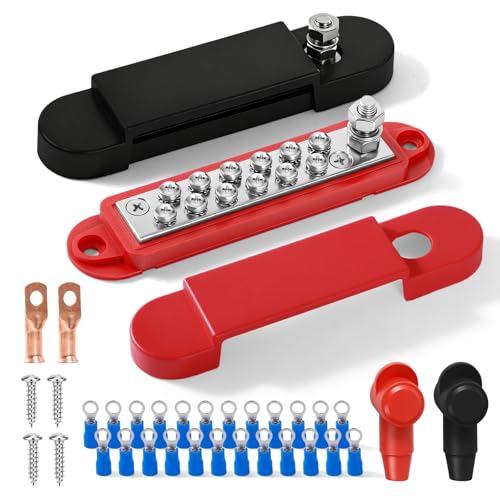
Best for: solar or automotive wiring where a compact, durable 150A bus bar is required. Features solid tinned copper and a rigid base with 1/4″ studs and 12 terminals. Snap-lock covers resist vibration and prevent shorts during service. Caution: verify mounting space and terminal access to avoid reach problems in tight compartments.
Buying Guide
What should I consider when choosing a marine 12V power distribution block?
- Current rating: Match the block’s amperage to your anticipated loads and future expansion. Higher ratings allow more devices without overheating.
- Terminal type and size: Ensure the block supports the gauge and quantity of wires you plan to connect. Larger studs accommodate bigger lugs.
- Negative/ground handling: Some blocks offer integrated negative buses; decide if you need a combined solution or separate grounds.
- Mounting space and footprint: Check base shape, overall dimensions, and enclosure clearance to fit your vessel or vehicle.
- Protection and insulation: Look for covers, snap-locks, and corrosion-resistant materials suitable for saltwater or humid conditions.
- Wiring organization: Consider blocks with clear labeling, spare fuse storage, or built‑in fuse options for tidy installations.
FAQ
- What is a marine power distribution block? It is a hub that distributes 12V DC power from a battery to multiple circuits with a common ground, often used in boats and RVs.
- Do I need a fused block? Fused blocks add protection per circuit, reducing the risk of short circuits and wire damage.
- Can these blocks handle solar wiring? Many models support solar or inverter connections, but confirm amperage and conductor size for your array.
- Is it better to choose a block with a negative bus? If your system requires multiple negative connections, a block with an integrated negative bus simplifies grounding.
- What maintenance is required? Periodically inspect terminals for corrosion, clean contact surfaces, and verify that connections remain tight.
- Do these blocks require special tools to install? Basic wrenches and screwdrivers are typically sufficient for terminal and stud connections; refer to the product’s mounting instructions.