Best GPS for Boat Navigation: Top Picks for Safe, Smart in-Water Travel
Finding the right GPS for boat navigation comes down to clarity, reliability, and map coverage. This guide highlights five strong options, suitable for different boaters from casual anglers to serious explorers. Each product section explains who it’s best for, why it was selected, and a practical caution.
Summary of selected products:
| Product | Best For | Key Benefit |
|---|---|---|
| Humminbird Helix 5 G3 | Anglers and compact helm setups | Dual Spectrum CHIRP for broad and detailed sonar views with Basemap compatibility |
| Simrad GO9 XSE | Multi-function dashboards on mid-sized boats | Premium charting with DISCOVER maps and integrated sonar |
| Garmin Striker Vivid 7cv | Easy-to-use color fishfinder on mid-sized boats | Vivid imaging with CHIRP and ClearVü for clear targets |
| Garmin GPSMAP 79sc | Rugged handheld backups and float-ready options | Built-in BlueChart coastal coverage and floating design |
| Garmin Striker 4 | Compact, affordable primary sonar solution | Clear Vu sonar with easy waypoint navigation |
Humminbird Helix 5 G3 GPS Fish Finder

The Humminbird Helix 5 G3 combines a compact 5-inch display with enhanced GPS navigation and Dual Spectrum CHIRP sonar. Best for anglers who need a portable, easy-to-read unit that can cover larger lakes or coastlines via Basemap and compatible premium charts. The Dual Spectrum mode provides wide-area scanning and a narrow, detail-focused view for structure and fish-holding areas. A potential limitation is screen size if you’re navigating complex channels at high speed.
Simrad GO9 XSE Chartplotter and Fishfinder

The Simrad GO9 XSE is designed for larger cockpit layouts or center-console boats needing a multifunction display. It includes a C-MAP DISCOVER chart card for comprehensive vector charts, high-detail bathymetry, and built-in CHIRP sonar via the 83/200 kHz transducer. Best for boaters who want an integrated system with radar and broad US/Canada coverage. A caution: the setup can be more complex than entry-level units.
Garmin Striker Vivid 7cv

The Garmin Striker Vivid 7cv offers a large 7-inch color display and vivid scanning sonar, making it easier to distinguish fish and underwater structure. The GT20 transducer supports traditional CHIRP and ClearVü imaging for detailed bottom targets. Best for boaters who value clear color imagery and straightforward waypoint marking. Limitation: may be heavier on power use than smaller units on long trips.
Garmin GPSMAP 79sc Handheld
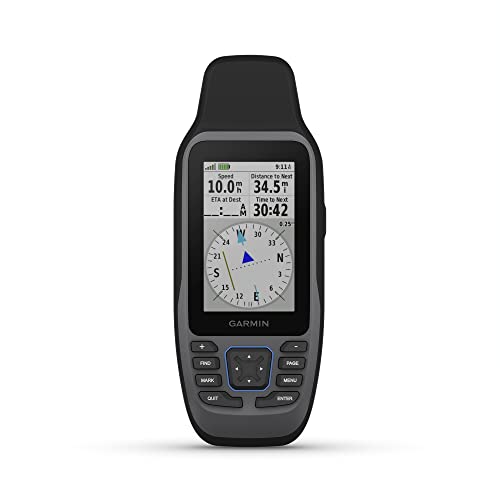
The GPSMAP 79sc is a rugged, floating handheld GPS with BlueChart coastal coverage. It’s best for backup navigation, shore-to-boat transitions, and blue-water excursions where a floatable unit is advantageous. It supports multiple satellite systems for reliable tracking. Caution: handheld use may require separate mount for continuous helm visibility on some boats.
Garmin Striker 4 with Transducer

The Striker 4 provides a compact entry-level option with Clear Vu high-frequency sonar and a 3.5-inch display option. It’s ideal for small boats or budget-minded users who still want reliable sonar and waypoint navigation. Better for simpler setups; it may lack advanced mapping features found on larger models.
Buying Guide: Key Considerations For Your Boat GPS
- Display size and readability: Larger screens provide easier interpretation of charts and sonar, especially in bright sunlight or rough water.
- Sonar technology: CHIRP traditional, CHIRP ClearVü, and DownScan Imaging each reveal different underwater details. Choose based on fishing needs and cruising style.
- Chart coverage: Ensure the device supports the regions you boat in, including coastal and inland lake charts. Some units require additional map cards.
- Network and integration: Multi-function displays (MFDs) can integrate radar, sonar, and mapping. Consider your current helm setup and space.
- Power and durability: Look for IPX ratings and rugged construction if you boat in saltwater or extreme weather.
- Backup options: A handheld unit can be valuable as a backup or for shore excursions away from the main boat system.
FAQ
- What’s the main difference between Dual Spectrum CHIRP and standard CHIRP? — Dual Spectrum CHIRP offers two search modes (wide for coverage and narrow for detail). This helps balance fishing targets with navigation needs.
- Do I need preloaded coastal charts? — Preloaded charts save time, but you may want additional premium map cards for expanded coverage and features like bathymetric contours.
- Is a bigger screen always better for boat navigation? — Bigger screens improve readability, but consider helm space, power draw, and glare when selecting size.
- Should I choose a handheld GPS as a backup? — Yes, handhelds provide redundancy and can be carried to shore or used as a backup on deck.
- What should I look for in a transducer? — Transducer type (CHIRP, DownScan), mounting location, and compatibility with your boat’s hull and speed requirements.
- Can these devices integrate radar? — Some models (like higher-end Simrad GO9 XSE) support radar and networked sonar; check your helm’s capacitance and wiring needs.