Best Boat Fire Extinguishers for Safe Onboard Use
When selecting a fire extinguisher for a boat, choose models designed for marine risks, including Class B (flammable liquids) and Class C (electrical equipment) fires. The best options here emphasize corrosion resistance, quick discharge, and suitability for marine environments. This guide highlights five top picks and explains who each is best for, plus practical buying tips for boaters, sailors, and fishers who want reliable protection at sea.
Buyer overview: The following table summarizes the five top boat-focused extinguishers, their key strengths, and ideal use cases. Use this quick reference to compare purposes and suitability at a glance.
| Product | Best For | Why It Stands Out |
|---|---|---|
| Kidde Fire Extinguisher for Boats, 5BC | Small to mid-size boats needing reliable marine-grade protection | All-metal construction; corrosion-resistant; fast, simple pull pin |
| Kidde Fire Extinguisher for Boats, 10BC | Boats with higher fire risk areas | Higher B rating for difficult-to-control fires; compact for onboard storage |
| Kidde Mariner 5, 5BC | Everyday boats with a focus on quick action | Marine-grade materials; solid discharge performance |
| First Alert Marine 1A:10B: C, FE1A10GR | Marinas and small vessels needing versatile, rechargeable unit | UL-rated marine extinguisher; durable all-metal construction |
| AmzBoom 3-Pack Marine, 3-Pack | Boats that want multiple easy-access units | Three units with mounting brackets; broad A-B-C-K coverage; non-toxic residue-free formula |
Kidde Fire Extinguisher for Boats, Single-Use 5BC
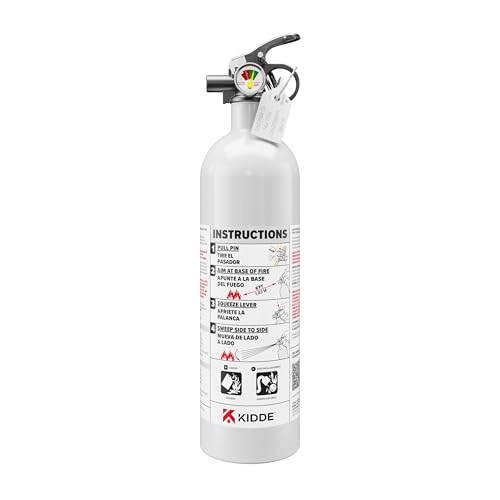
The Kidde 5BC marine extinguisher is designed to combat common on-board fires involving flammable liquids and electrical equipment. It features corrosion-resistant aluminum and stainless-steel components and a rust-resistant, all-metal lever with a safety pin. This model is best for small-to-mid-size boats where a compact, dependable unit must be accessible in a pinch. It’s a straightforward option for straightforward emergencies.
Who it’s best for: Sailors and boat owners needing a durable, low-maintenance extinguisher for standard marine risks. Why selected: Its all-metal construction and marine-grade design provide reliable performance in salty environments. Limitation: It offers a single-use design, meaning replacement after discharge is required rather than recharge.
Kidde Fire Extinguisher for Boats, Single-Use 10BC
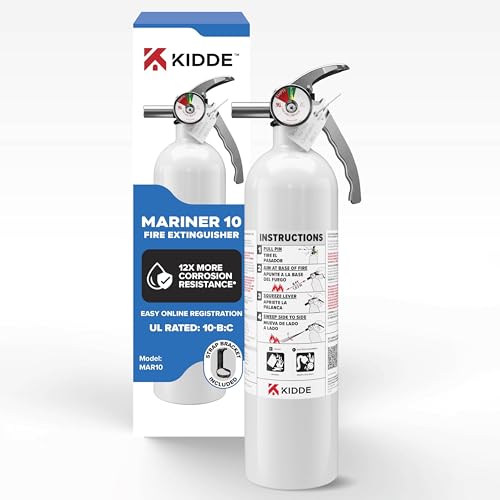
This 10BC model from Kidde expands protection for boats by providing a broader Class B&C capability in a compact unit. It features aluminum and stainless-steel components for corrosion resistance, with a discharge time designed to deliver a strong reach. This is a solid choice for vessels with higher anticipated fire risk or a need for a longer discharge window than smaller “5BC” units.
Who it’s best for: Boats that require stronger marine-grade protection without expanding size significantly. Why selected: Higher BC rating helps address a wider range of fires. Limitation: Still a single-use unit; replacement is required after use.
Kidde Mariner 5 Fire Extinguisher, 5BC

The Kidde Mariner 5 is tailored for everyday boating needs with a 5BC rating and marine-grade construction. It emphasizes quick discharge timing and compact form for easy mounting or storage on smaller vessels. Its stainless-steel and aluminum components resist corrosion from saltwater exposure, helping it maintain performance over time.
Who it’s best for: Captains and boaters seeking a reliable, compact marine extinguisher for routine use. Why selected: Balances weight, size, and marine durability. Limitation: As a single-use unit, replacement is necessary after discharge.
First Alert Marine Fire Extinguisher, FE5R-PWCNA

Designed for marine personal watercraft use, the FE5R-PWCNA meets Coast Guard size requirements and receives ANSI/UL711 and CAN/ULC-S508 compliance. It utilizes a dry chemical extinguishing agent rated for multiple fire classes (5-B:C). This unit offers portability and a rugged build with a marine-friendly valve and trigger mechanism, suitable for quick action during sea-to-shore transitions.
Who it’s best for: Small boats or personal watercraft operators who need Coast Guard-compliant equipment that’s easy to deploy. Why selected: Certified for marine use and compatible with common PWC and boat fire scenarios. Limitation: Rechargeability requires professional service after discharge.
AmzBoom Fire Extinguisher for Home, Car, Boat 3-Pack

AmzBoom offers a three-pack solution with mounting brackets, designed for versatility across kitchens, cars, boats, and other spaces. It covers A, B, C, and K fires and uses a water-based, non-toxic formula that forms a protective coating to mitigate reignition. This set is ideal for boaters who want multiple, affordable units and straightforward maintenance.
Who it’s best for: Boats that require multiple accessible extinguishers and a residue-free cleanup. Why selected: The three-pack approach provides coverage for multiple onboard locations. Limitation: The water-based formula may have different performance characteristics compared with dry chemical models in certain fire types.
Buying Guide
What boat-fire risk should guide your choice?
Consider the typical fire risks on your vessel. Boats with galley kitchens, gas stoves, and engine compartments benefit from extinguishers rated for Class B and C fires. If you regularly run at higher speeds or have larger engines, a higher BC rating can be advantageous.
Which features matter most on water?
Marine extinguishers should resist corrosion, be compact for easy storage, and have a simple discharge mechanism. Look for all-metal construction, stainless-steel components, and discharge times that fit your boat’s layout and crew response time.
Single-use vs rechargeable units
Single-use units are common and easy to manage, but rechargeable models offer long-term savings for frequent use areas. If you prefer maintenance-free solutions, prioritize dependable single-use extinguishers with accessible replacement options through marine suppliers.
Placement and accessibility
Place extinguishers within arm’s reach of major risk areas: galley, engine room, electrical panels, and exterior decks. Store at least one unit in the cockpit or helm area for quick access during an emergency.
Maintenance and inspection tips
Regularly check pressure indicators if available, confirm accessibility, and replace units after any discharge. Record inspection dates and ensure mounting brackets remain secure with dry, corrosion-resistant fasteners.
What about multi-pack solutions?
Three-pack options can improve coverage across a small boat. They reduce the chance of a single unit being inaccessible during an incident and support a more systematic response plan for crew members.
Summary of recommended choices
- Best all-around marine protection: Kidde Fire Extinguisher for Boats, 5BC
- Better for higher risk or larger boats: Kidde Fire Extinguisher for Boats, 10BC
- Compact marine option with quick action: Kidde Mariner 5, 5BC
- Coast Guard-certified option for PWCs and small craft: First Alert FE5R-PWCNA
- Versatile multi-pack for multiple onboard locations: AmzBoom 3-Pack
Frequently Asked Questions
- Q: What fire class should I prioritize for boats? A: Focus on Class B (flammable liquids) and Class C (electrical) coverage for engine rooms, galley, and wiring areas.
- Q: Are marine extinguishers reusable? A: Some are rechargeable after discharge; many marine units are designed for single-use and require replacement.
- Q: Where should I mount a boat extinguisher? A: Near the galley, engine area, electrical panels, and along the cockpit for quick access.
- Q: Do I need multiple extinguishers on a boat? A: For larger boats or multi-level decks, multiple units improve response time and coverage.
- Q: What maintenance is needed for boat extinguishers? A: Inspect pressure indicators, ensure brackets are secure, and replace after discharge or if performance appears compromised.
- Q: Are there safety tips for using extinguishers on a boat? A: Aim at the base of the fire, sweep from side to side, and evacuate if the fire grows beyond control.