Best Cranking Battery for Boat: Top Lithium and AGM Picks for Reliable Starts
Answering the question “which cranking battery is best for a boat?” this guide highlights five top options designed for marine use. These batteries balance starting power, deep-cycle capability, and compact or lighter weight designs to free up space on board. The best fits include dual‑purpose LiFePO4 models for space savings and strong cold-crank power, plus a high‑CCA AGM option for traditional setups. This article helps boaters choose based on engine size, typical climate, and maintenance preferences.
Summary at a glance: the LiTime 100Ah dual‑purpose battery (900 CCA) is ideal for small outboards and tight spaces; the LiTime 165Ah dual‑purpose (1200 CCA) suits mid‑sized engines and saltwater environments; the UPLUS 79Ah dual‑purpose (550 CCA) fits compact boats and limited compartments; Redodo 20Ah (800 CCA) offers a compact option for light craft and trolling setups; Interstate 100Ah AGM (925 CCA) is a robust traditional choice with strong cycle life. Use this table to compare at a glance.
| Product | Best For | Key Strength | Approx. Weight |
|---|---|---|---|
| LiTime 12V 100Ah Dual Purpose | Small boats, outboards | 900 CCA, light weight | ~22.7 lb |
| LiTime 12V 165Ah Dual Purpose | Mid-size boats, reliable starts | 1200 CCA, high capacity | ~ |
| UPLUS Group 24M Dual Purpose | Constrained compartments | 550 CCA, compact design | ~50.7 lb |
| Redodo 12V 20Ah Cranking | Lightweight setups | 800 CCA, compact | ~ |
| Interstate Marine/RV 100Ah AGM | Traditional systems, long life | 925 CCA, deep-cycle performance | ~ |
LiTime 12V 100Ah Dual Purpose Cranking Battery

The LiTime 12V 100Ah dual‑purpose LiFePO4 battery combines cranking and deep‑cycle capabilities in one compact unit. It supports outboard engine starting and powers marine devices, reducing the need for two separate batteries. It fits standard Group 24 frames and weighs about 22.71 lbs, offering easy installation and a lighter hull presence. This makes it a strong choice for smaller boats and anglers who value space savings and consistent cold‑start reliability.
Best for: small to mid‑sized boats needing reliable starts without carrying extra batteries. Caution: verify that your current wiring and BMS support LiFePO4 if upgrading from lead‑acid.
LiTime 12V 165Ah Dual Purpose Cranking Battery
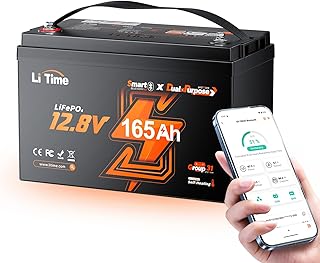
This larger LiTime dual‑purpose battery delivers 165Ah capacity with 1200 CCA starting power. It’s designed to handle bigger outboards and deeper cycles for marine electronics, trolling motors, and navigation gear. The ABYC‑13 compliant installation helps ensure safe, cross‑brand use in many boats. It suits mid‑sized, saltwater or freshwater vessels where a stronger start and more usable energy are needed.
Best for: boats with mid‑size engines or heavy equipment that demand robust cold starts. Caution: compatibility varies with older Mercury Optimax models; check the guide before purchasing.
UPLUS BCI Group 24M Dual Purpose AGM Marine Battery

The UPLUS Group 24M dual‑purpose AGM battery combines starting and deep‑cycle capabilities in a single unit. With 79Ah and 550CCA, it focuses on space savings and straightforward installation. Its dimensions support boats with tighter battery compartments, and the AGM chemistry reduces maintenance compared with flooded lead‑acid. This makes it a practical choice for smaller vessels or cruisers with limited storage.
Best for: boats needing a compact dual‑purpose solution with less maintenance. Caution: confirm fitment in your boat’s battery tray and stacking limitations before ordering.
Redodo 12V 20Ah Cranking Battery
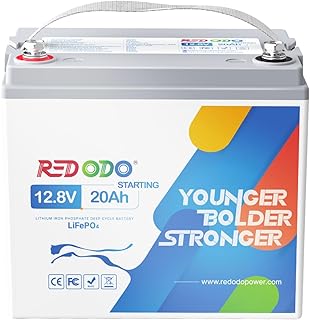
Redodo’s 12V 20Ah LiFePO4 battery delivers 800 CCA, suitable for small boats, trolling setups, and light‑duty marine equipment. The prismatic cells and sheet metal design contribute to durability and resistance to swelling, extending service life in vibration‑prone marine environments. It’s a compact option for anglers or hobby boats with minimal electrical loads.
Best for: pneumatically light craft or as a supplementary starting battery. Caution: limited ability for long continuous deep cycling; not ideal as the sole power source on larger boats.
Interstate Batteries Marine/RV 100Ah AGM

The Interstate Marine/RV AGM battery provides extreme deep‑cycle power with high‑cranking capability. Designed for motors and accessories like trolling motors, it emphasizes longevity with thick plates to support repeated discharges and recharges. It’s positioned as a dependable traditional option for boaters who prefer proven lead‑acid AGM chemistry and strong support from an established brand.
Best for: boaters who favor robust, established AGM performance and long cycle life. Caution: heavier than some lithium options; consider weight and space on smaller boats.
Buying Guide
- Battery chemistry matters: LiFePO4 offers high energy density, longer life, and lighter weight compared with traditional lead‑acid. AGM provides reliable maintenance‑free performance but adds weight. Choose based on space, weight sensitivity, and maintenance tolerance.
- Cold‑cranking power vs. capacity: CCA/MCA/HCA values indicate starting strength in cold and warm conditions. For cold climates, prioritize higher CCA; for long runs and devices, prioritize higher capacity and deep‑cycle compatibility.
- Compatibility and fit: Check group size (e.g., Group 24 or 31) and whether your boat’s battery compartment or tray supports the unit’s dimensions. Some brands offer ABYC‑compliant cross‑brand installations to simplify compatibility.
- Space and weight on board: Dual‑purpose batteries save space by combining starting and deep‑cycle roles. If weight is critical for performance, LiFePO4 options offer substantial weight savings over lead‑acid.
- Maintenance and installation: AGM and LiFePO4 require different charging profiles. Ensure your onboard charger supports the chosen chemistry to optimize life and performance.
- Warranty and service: While not a feature claim here, consider brands with accessible support and clear warranty terms for marine environments.
FAQ
- What is the advantage of a dual‑purpose marine battery? It combines starting power and deep‑cycle capability in one unit, saving space and simplifying wiring on boats with limited compartments.
- Is LiFePO4 safer for marine use than AGM? LiFePO4 is generally known for stable chemistry and excellent cycle life; however, proper charging and protection are essential in any marine system.
- Will these batteries fit my Group 24 or Group 31 tray? Most dual‑purpose units target standard groups; verify exact dimensions and tray clearance before purchase.
- Do I need a special charger for LiFePO4 or AGM? Yes. LiFePO4 requires a charger compatible with lithium chemistries; AGM needs a charger designed for AGM lead‑acid. Mismatched charging can reduce life.
- How heavy is a lithium dual‑purpose battery compared to lead‑acid? Lithium units are typically 50–80% lighter for the same usable capacity, easing boat handling and fuel efficiency.
- What if I have a large outboard engine? Look for higher CCA ratings (e.g., 900–1200 CCA) and sufficient capacity to cover accessories during startup and operation.