Best Bow Navigation Lights for Boats: Clear Safety Lights for Every Vessel
Whether you’re piloting a speedboat, pontoon, or sailing craft, choosing reliable bow navigation lights is essential for safe nighttime operation. This guide highlights five top options designed for different boats, budgets, and installation preferences. Best for frequent night voyagers, mariners seeking durable housing, and DIY installers, these picks balance visibility, durability, and ease of use. Read on to compare features, installations, and ideal use cases to help you buy with confidence.
| Product | Brand | Best For | Notes |
|---|---|---|---|
| Obcursco Boat Navigation Lights | Obcursco | Small to mid-size boats; foggy conditions | High visibility; IP67; corrosion-resistant |
| Nilight Marine Boat Navigation Light 24LED | Nilight | Pontoon, speedboat, skeeter; easy install | 112.5° per color; IP67 |
| marinexplore Bi-Color Bow Light | marinexplore | Skiffs and power boats; USCG readiness | 225° radiation; IP67; 12V |
| attwood LightArmor Navigation Light | attwood | Deck boats; longer lifetime | 2-mile visibility; stainless steel |
| SEACHOICE Bow Light, Chrome Bi-Color | SEACHOICE | Smaller sail or powerboats under 39′ | 1 mile visibility; chrome finish |
Obcursco Bow Lights: Red and Green LED, Bi-Color 225°

Best for late-night boating and vessels where visibility through fog is critical. The Obcursco unit uses a die-cast chrome-plated zinc housing with red and green lenses and a 225° radiation angle. It operates at 12V DC with a 6W draw and 20AWG wiring, delivering clear color separation for port and starboard illumination. It meets USCG visibility standards for up to 2 nautical miles, making it suitable for pontoon, skiff, and small yacht use. Caution: heavier chrome surface could show wear over time in salty environments.
Generic Bi-Color Bow Lights: Red & Green, 12V

Best for budget-conscious buyers needing straightforward 12V operation and reliable IP67 waterproofing. The unit features marine-grade S.S.316 housing, UV-resistant PC lens, and safety-rated wiring. It provides red/green navigation with 1 nautical mile visibility and fits boats under roughly 39 feet. Choose this if you want easy installation and sturdy corrosion resistance without premium chrome finishes. Limitation: lower visibility range than higher-end models in rough seas.
Nilight 24LED Bow Lights: High Brightness 12V

Best for night navigation where bright, energy-efficient illumination matters. The Nilight unit uses 24 LEDs (12 red, 12 green) with 112.5° per color to cover broad angles. It ships with two screws for installation and a stainless steel housing. It’s designed to meet IP67 waterproof standards and aims for extended lifespan through heat dissipation features. Consider this when you want high brightness without excessive power draw. Limitation: assembly hinges on included mounting hardware; verify boat hull compatibility before mounting.
attwood LightArmor 2-Mile Navigation Lights
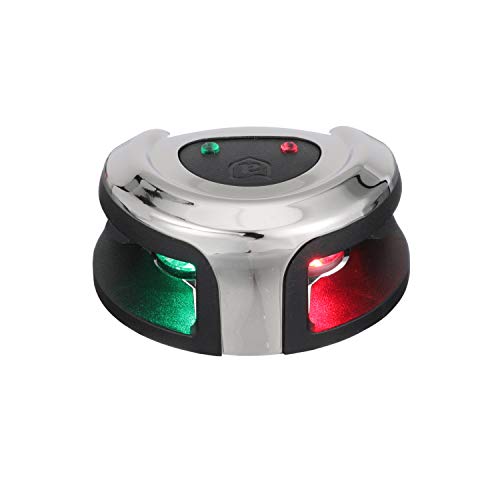
Best for boats that require higher visibility and durable build. The LightArmor uses a 304 stainless steel housing with green and red LEDs offering 2-mile visibility, and it’s IP67-rated for moisture and dust resistance. It is designed for deck mounting on vessels up to 65 feet. Choose this for long-term durability and clear long-range signaling. Limitation: stainless steel housing can be heavier than plastic rivals, which may affect mounting on lighter craft.
SEACHOICE Bow Light: Chrome Bi-Color

Best for smaller sail or powerboats under 39 feet requiring a chrome-bi-color finish. The SEACHOICE bow light provides red/green navigation with up to 1 mile visibility, aiding safe navigation in poor visibility. It’s a compact, practical option for cruisers focusing on cost efficiency and straightforward installation. Limitation: shorter visibility range compared to higher-end models could be less ideal in open-water or rougher conditions.
Buying Guide
- Voltage and power: Most boat navigation lights run on 12V DC. Check your boat’s electrical system and choose a light with compatible power draw to avoid battery strain.
- Visibility range: Higher visibility (1–2 miles) is preferred for larger vessels and open-water use, while 1 mile is often sufficient for smaller craft and coastal trips.
- Radiation angle: A wider angle (around 225°) improves side and front visibility, reducing blind spots at dock or in channels.
- Durability and housing: Stainless steel or corrosion-resistant housings resist saltwater exposure; IP67 rating ensures protection against immersion and dust.
- Installation style: Adhesive, deck-mounted, or pole-mounted options affect mounting effort and vibration handling. Verify mounting hardware compatibility with your hull.
- Compliance: Ensure the light meets USCG requirements for visibility and color standard (red for port, green for starboard).
- Maintenance: Consider ease of cleaning, lens clarity, and heat management to extend life in harsh marine environments.
FAQ
- What does IP67 mean for boat lights?
IP67 means the light is dust-tight and protected against immersion up to 1 meter for 30 minutes, making it suitable for rough seas and splashes.
- How many miles of visibility should I expect from bow lights?
Typical bow lights provide 1–2 nautical miles of visibility, depending on build quality and lens design.
- Can I install bow lights myself?
Yes, most models are designed for DIY installation with basic mounting hardware and wiring. Follow the manufacturer’s wiring diagram and ensure power is off during installation.
- What color is allowed for the port and starboard sides?
Red is port (left), green is starboard (right). Both must be visible from the bow and sides.
- Are chrome finishes necessary?
No; chrome finishes improve aesthetics and corrosion resistance, but functionality depends on housing material and sealing.