Best Boat Trailer Bow Stop Brackets for Secure Towing
Answering the common buyer question: which boat trailer bow stop bracket best protects your bow and keeps it secure during transport? This guide highlights five top options, explains who they’re best for, and compares key features like fit, material, and mounting. Ideal for boat owners, dockside technicians, and trailer enthusiasts seeking reliable protection and ease of installation. Below is a quick buying table to help you compare at a glance.
| Product | Best For | Material | Mount Width | Notes |
|---|---|---|---|---|
| Attwood 11200-1 Boat Trailer Rubber Bow Stop | Marine owners needing a snug rubber stop | Natural rubber | 2″ x 2″ | Deep V design for bow fit; compact |
| DITKOK Boat Trailer Winch Post with Bow Stop Roller | Trailers needing adjustable height and added security | Steel with rollers | 4″ wide tongue range | Height adjustable; includes safety hook |
| Shimeyao Adjustable Boat Trailer Bow Rest Catcher | Hands-on setup with corrosion resistance | Hot-dip galvanized steel | 3″ wide tongues | Universal fit; marine-grade coating |
| UANOFCN 2″ V-Style Marine Bow Stop | Bows prone to shifting; non-marking option | Non-marking polyurethane | 2″ mounting width | Non-marking; V-stop cradle |
| Haokixin V-Shape Boat Trailer Bow Stop | Budget-friendly, durable polyurethane stop | Polyurethane | 2″ mounting width | Non-marking; protective against scratches |
Attwood 11200-1 Bow Stop V-Block
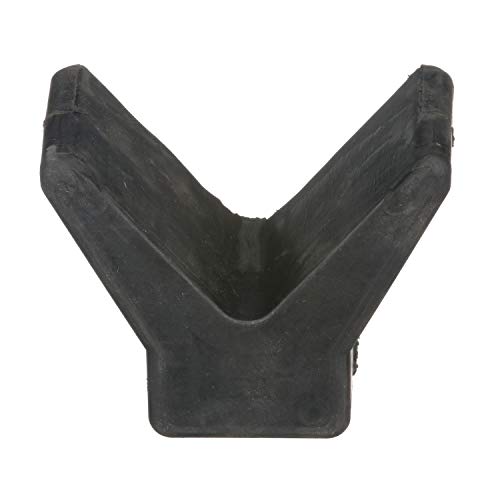
The Attwood bow stop uses a deep 80° V design to cradle the bow snugly. Made from natural black rubber, it resists deformation and weathering, and it measures 2 inches by 2 inches with a 3-inch opening. Best for smaller bows and lighter loads, this stop emphasizes a simple, low-profile installation. Choose this if you want a straightforward, non-marking rubber solution that minimizes hull contact.
Best for: Owners seeking a compact, rubber option that provides a gentle, secure bow hold without marking the hull. Limitation: May provide less structural support on larger boats or heavy launches.
DITKOK Boat Trailer Winch Post with Bow Stop Roller

The DITKOK setup combines a winch post with an adjustable bow stop and a safety hook, designed to secure the boat to the trailer tongue. It features height adjustability from 16.5″ to 20.6″ and width compatibility from 3″ to 4″. This makes it a flexible choice for various watercraft, including speedboats and jet skis. Best for: Trailers needing reliable securing mechanisms and adjustable height for different vessels. Caution: Verify your trailer tongue width and mounting area before purchase to ensure fit.
Shimeyao Adjustable Bow Rest Catcher

Shimeyao offers a galvanized steel bow rest catcher compatible with 3×3 and 3×4 inch tongues. It provides corrosion resistance thanks to its marine-grade finish and offers enhanced bow support to reduce impacts during loading and transport. Best for: Trailer owners who want a durable, corrosion-resistant option with flexible mounting. Limitation: Heavier steel could slightly increase weight and installation effort.
COLOFULWAY 3″ Boat Trailer Y Bow Stop

COLOFULWAY’s poly marine Y bow stop is designed to buffer and protect the bow during loading, with a 3″ bracket fit and a 1/2″ mounting hole. It aims to prevent black marks and scratches on gelcoat, making it a good option for owners prioritizing hull aesthetics. Best for: Boat owners seeking a non-marking, softer buffer. Caution: Poly material may not provide the same rigid support as metal options in extreme loading conditions.
Haokixin V-Shape Bow Stop

Haokixin offers a 2″ width, 4″ V-span rubber bow y-block with 1/2″ mounting holes. Made of polyurethane, it emphasizes non-marking protection and smooth contact with the hull. Best for: Those who want a soft, non-marking surface that reduces scratching. Limitation: While non-marking, it may wear faster than hard plastics or metal in heavy-duty use.
Buying Guide
What matters most when choosing a bow stop?
- Fit to trailer tongue width and mounting holes: Ensure the stop matches your trailer’s tongue size and hole pattern.
- Material and hull compatibility: Rubber and polyurethane stops are gentler on gelcoat; metal options offer rugged durability but may scratch if not well shielded.
- Bow protection versus securing strength: Softer stops cushion impacts; rigid stops can reduce movement but may scratch hulls if not well designed.
How to measure for the right bow stop?
- Measure the tongue width and mounting hole diameter on your trailer.
- Check the bow’s widest point and how the stop will contact it during loading and transport.
- Consider whether you need corrosion resistance for saltwater use or simple abrasion resistance for freshwater use.
Material considerations
- Rubber: Good for non-marking contact and lightweight protection; may degrade with UV exposure over time.
- Polyurethane: Non-marking and tougher against marks; typically more resistant to abrasion than natural rubber.
- Steel with galvanizing: Very durable and corrosion-resistant if properly coated; heavier and requires care to prevent rust.
Installation and maintenance tips
- Follow manufacturer torque and mounting instructions to avoid loosening during transit.
- Regularly inspect for cracks, wear, or deformation, especially after saltwater use.
- Clean and dry the area before re-mounting to maintain a secure fit.
Common buying considerations
- Budget versus longevity: Polyurethane options may offer better longevity with non-marking benefits at a moderate cost.
- Multiple boats vs. single-boat usage: A versatile, adjustable bow stop is preferable for owners with different vessel types.
- Mounting flexibility: Some products offer adjustable heights; others provide fixed positions. Choose based on how often you tow different loads.
FAQ
- What is the best bow stop for a non-marking hull? Non-marking polyurethane or high-quality rubber options minimize hull markings.
- How do I know if a bow stop fits my trailer? Check tongue width, mounting hole diameter, and compatibility with your trailer’s bracket dimensions.
- Are rubber bow stops better than steel? Rubber stops protect the hull more, but steel stops can offer greater rigidity if coated for corrosion resistance.
- Can I use a bow stop on saltwater trailers? Yes, if you choose a corrosion-resistant finish or material designed for saltwater environments.
- Should I replace bow stops often? Inspect for wear, cracks, or deformation; replace if performance is compromised to prevent hull damage.