Best Boat Oil Pressure Gauge Options for Safe Marine Engine Monitoring
When selecting a boat oil pressure gauge, choose models that clearly display pressure, operate reliably in marine conditions, and suit your engine’s monitoring needs. This guide highlights five solid options across different styles and backlighting to help captains pick the right gauge for night visibility, accuracy, and installation ease. The top picks cover digital displays, perimeter-lighted dials, and robust mechanical gauges to fit most boats and dashboards. Target buyers include new install installers, hull owners upgrading existing gauges, and those seeking clear, low-maintenance monitoring.
Summary of chosen products
| Product | Type | Range | Best For |
|---|---|---|---|
| BYYOUIV 2″ Oil Pressure Gauge | Digital | 0-100 PSI | Night visibility; easy installation |
| Faria Beede 13002 Coral (80 PSI) | Mechanical dial | 80 PSI | Classic look; durable perimeter lighting |
| Sierra 57903P Amega | Mechanical dial | 80 PSI | Bright numerals; low current draw |
| ARTILAURA 52mm 0-150 PSI | Mechanical with 7-color backlight | 0-150 PSI | Color customization; versatile for cars and boats |
| Faria Kronos 19002 | Mechanical dial | 80 PSI | Elegant dial; corrosion-resistant design |
BYYOUIV 2″ Oil Pressure Gauge with Sensor

The BYYOUIV gauge is a compact digital option with a 0-100 PSI range. It includes a built-in sensor and a bright white LED display for high night visibility, making it ideal for pilots who need quick, legible readings in low-light conditions. Best for boaters who want a crisp digital readout in tight dash spaces and simple wiring. A potential limitation is digital readings requiring a power source and sensor placement that ensures accurate reactions to engine pressure changes.
Faria Beede 13002 Coral Oil Pressure Gauge (80 PSI)

This 2-inch, perimeter-lighted dial offers a classic aesthetic with a contoured white pointer and blue/white graphics. The black aluminum bezel adds a durable edge. Best for boat owners seeking a traditional feel with reliable illumination and a design that complements classic dashboards. Limitation: 80 PSI range may be narrower for some high-output engines; ensure your engine’s pressure stays within the gauge’s scope.
Sierra 57903P Amega 80 PSI Oil Pressure Gauge Kit

The Sierra 57903P kit features a 2-inch dial with black background, red graduations, white numerals, and a vivid white pointer. It draws low current (0.10-0.15 A) and emphasizes clear readability under various lighting. Best for boaters who value strong contrast and a straightforward installation path. A caveat is that Sierra’s warranty policy in this section notes coverage generally supports parts compatibility, so verify fitment with your existing panel.
ARTILAURA Oil Pressure Gauge Electric 2-1/16″ 52mm

ARTILAURA’s gauge supports 0-150 PSI and offers seven backlight colors for visibility in any environment. It uses a 316L metal, rubber, and plastic construction with a scratch-resistant glass lens. Best for boaters who like customizable lighting and a robust build. Choose this if you want color options to match instrument clusters, but note the higher backlight configurability may require a careful wiring plan.
Sierra 65501P Lido 0 to 80 Psi Dial
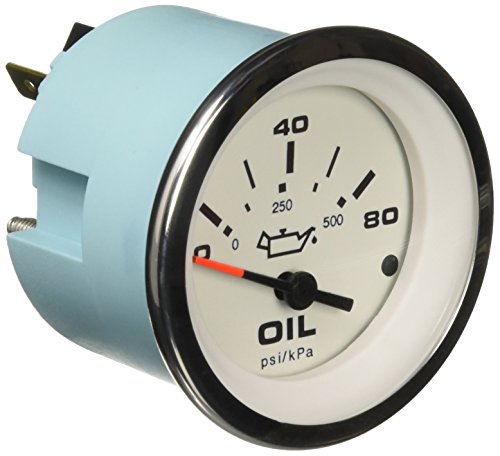
This Sierra 65501P model provides a 0-80 psi range with a classic dial and a scratch-resistant surface. It’s a solid pick for boats needing a straightforward, reliable gauge with traditional dial aesthetics. Best for sailors replacing older instruments where compatibility with existing bezels and mounting positions matters. Limitation: 80 PSI ceiling may not cover engines with higher pressure readings.
Faria 12902 Euro Oil Pressure Gauge

This 2-inch, white-faced gauge focuses on anti-scratch glass and corrosion-resistant plastic cases with a 12 VDC negative ground. Best for boaters who want long-term durability in salty environments and a clean, legible face. A limitation is potential protection against corrosion but may require periodic maintenance to keep the lens clear in marine conditions.
Buying Guide: Key Purchase Considerations
- Gauge type: Digital vs. mechanical. Digital gauges offer crisp readings and night visibility, while mechanical dials provide a traditional look and often simpler installation.
- Pressure range: Match the engine’s typical oil pressure range. Most marine engines operate in the 0-80 PSI band; some high-performance motors may approach 100-150 PSI.
- Backlighting: Consider visibility in low-light conditions. Perimeter lighting is common on mechanical gauges, while digital displays may provide bright LED readings.
- Panel fit: Ensure the gauge diameter (2″ or 2-1/16″) fits the mounting hole in your dashboard. Check bezel finish to match existing gauges.
- Durability: Corrosion resistance, glass lens, and bezel materials are important for saltwater use. Prefer models with sturdy housings and scratch-resistant lenses.
- Wiring and sensors: Digital gauges require sensors and powering; mechanical gauges rely on engine oil lines. Verify compatibility with your boat’s electrical system and engine sensor locations.
- Color and style: If you want to coordinate with existing instruments, choose a dial color, backlight, and bezel that match your dashboard theme.
Frequently Asked Questions
- What is the typical oil pressure range for most boats?
Most marine engines operate around 20-80 PSI, but this can vary by model and load. Always reference your engine’s manual for the recommended range. - Do digital oil pressure gauges need a separate sensor?
Yes. Digital models usually include a sensor that must be installed near the engine to relay pressure readings to the display. - Is a higher PSI gauge better for all engines?
No. It’s important to match the gauge range to your engine’s normal operating pressure to avoid inaccurate readings or wasted display range. - Can I replace multiple gauges at once?
Yes. When replacing several gauges, measure mounting hole sizes, electrical wiring, and the dash layout to ensure a clean installation. - Which gauge is best for night visibility?
Digital gauges with a bright LED display or mechanical gauges with perimeter lighting are both good options, depending on installation and readability preferences. - Are all backlit gauges marine-grade?
Not all; verify saltwater resistance and lens protection if you operate in harsh marine environments.