Best 12V Air Conditioner for Boat and Off-Grid Living in 2026
Looking for a reliable 12V air conditioner for a boat or off-grid setup? This guide highlights five compact, battery-powered cooling solutions that can run from a vehicle battery or solar power. Each option is described for specific use cases—from boat cabins to RV roofs—so you can pick the right fit for size, noise, and off-grid capacity. The buyer’s overview below helps you compare cooling power, run-time, and installation practicality at a glance.
| Product | BTU (Cooling) | Best For | Off-Grid Run Time | Notes |
|---|---|---|---|---|
| iRooVee 12V RV Air Conditioner | 11,000 | Off-grid RVs, vans, and boats needing rapid cooling | 8–12 hours (12V battery depending on capacity) | Quiet operation; includes both cooling and heating |
| OutEquip 12V RV Air Conditioner (10,000 BTU) | 10,000 | RVs and trucks seeking reliable cooling | 8–10 hours (12V battery depending on capacity) | Durable, weather-resistant design |
| Somokg 12V RV Air Conditioner (11,000 BTU) | 11,000 | Small spaces with quiet operation needs | 12 hours (Eco Mode with larger battery) | Low noise at 35 dB |
| Aspligo 8,000 BTU 12V Roof A/C | 8,000 | Thin-profile installs on campers and vans | Depends on battery size | Ultra-thin, easy remote control use |
| Jrswin 12V 12,000 BTU A/C | 12,000 | Large cab or cabin spaces on road trips | Battery dependent | Ultra-quiet at 45 dB |
The following sections describe each option in detail. Each product is evaluated for who benefits most, potential limitations, and how it performs in typical boat or off-grid scenarios. Use the buying guide to refine your decision after reading about the five choices.
iRooVee 12V RV Air Conditioner with Heat

The iRooVee unit offers 11,000 BTU of cooling and 3,500 BTU of heating, designed for off-grid campers, boats, and trailers. It uses a high-efficiency compressor and is billed as rapid cooling and heating, achieving comfort in about 10 minutes. It operates quietly at about 45 dB, reducing daytime disruption in cabins and sleeping areas. Off-grid capability relies on a vehicle battery, with claim of up to 8–12 hours depending on battery size. Best for boat cabins that need both cooling and heating with quiet operation.
Who it’s best for: boat owners and RV travelers who want heating as well as cooling without a separate boiler. Why selected: dual climate control combined in a single rooftop unit simplifies installation. Caution: battery run-time varies with battery health and external temperature; verify battery capacity matches desired runtime.
OutEquip RV Air Conditioner (12V, 10,000 BTU)

The OutEquip Pro 12V AC delivers 10,000 BTU cooling and is designed for off-grid operation via a vehicle battery. It claims quick cooling within minutes and a durable, weather-resistant build with UV-stabilized ABS housing and corrosion-resistant components. It is a strong option for RVs, campers, and boats where rugged reliability is essential. Best for: off-road or remote watercraft where exposure to sun and rain is frequent. Caution: cooling time can depend on outside temperature and battery capacity.
Why chosen: balanced cooling power with a tougher exterior for outdoor wear. Better for: users prioritizing durability and straightforward installation. Limitations: 8–10 hour runtime varies by capacity; ensure your battery setup aligns with expected use.
Somokg 12V RV Air Conditioner (11,000 BTU)
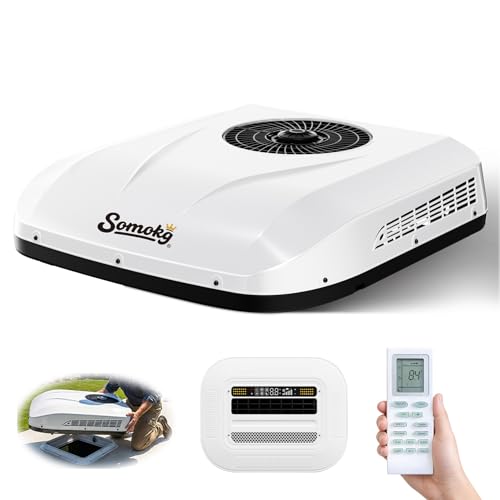
The Somokg 11,000 BTU unit claims very fast cooling with a high-frequency compressor and broad airflow to cover cabins effectively. It includes a soft-start feature to reduce startup surge, supporting longer runtimes on battery, solar, or generator power. It touts ultra-quiet operation at 35 dB, making it suitable for peaceful camping and night use. Best for: small to medium spaces where quiet operation matters most. Caution: Eco mode battery runtime depends on battery size; verify compatibility with your power system.
Why chosen: combined emphasis on quiet operation and efficient power use. Choose this if: you need low-noise cooling while running off-grid. Avoid if: your space is larger than the unit’s recommended coverage without supplemental airflow.
Aspligo 8,000 BTU 12V Rooftop A/C

Aspligo offers a thin 8,000 BTU rooftop unit designed for limited roof space, ideal for motorhomes, vans, and campers with a height constraint. It cools efficiently within minutes and is paired with a remote control for easy adjustments from inside the vehicle. Best for: installations with restricted roof height where airflow coverage is adequate. Caution: smaller BTU rating means rooms larger than the spec might require additional cooling support. The unit uses R134A refrigerant and has a compact footprint.
Why chosen: the ultra-thin profile enables installation where space is at a premium. Choose this if: your vehicle roof height is tight. Better for: smaller cabins and tight roof openings. Limitations: rated capacity around 8,000 BTU may not suffice for very hot, large interiors.
Jrswin 12V 12,000 BTU A/C

The Jrswin 12,000 BTU unit targets larger spaces such as cab areas in trucks or larger RV compartments. It emphasizes powerful cooling with a low noise profile (about 45 dB) for quiet operation on the road or parked. It includes safety features like multi-layer circuit protection to guard against surges and vibration. Best for: drivers needing robust cooling with minimal disturbance. Caution: higher BTU units may demand more electrical load; confirm battery and wiring can support the draw.
Why chosen: strong cooling performance for sizeable cabins. Choose this if: you need reliable cooling during peak heat in larger vehicles. Avoid if: your battery capacity is limited or if you drive in conditions where power management is a priority.
Buying Guide: 12V Air Conditioners For Boats And Off-Grid Use
What should you feed these units with?
Most 12V AC units require a substantial battery bank to deliver long runtimes. Look for deep-cycle or AGM batteries with enough amp-hours to meet your planned daily usage. Solar panels can top up the battery, especially in sunny boating conditions. Verify the system’s peak draw and plan wiring and fusing accordingly.
How to match BTU to space?
Higher BTU generally means faster cooling but greater power consumption. For boats and compact campers, 8,000–11,000 BTU is typical for small cabins. For larger galleys or living areas, consider 12,000 BTU units, but ensure your power system can handle the load. Consider airflow patterns when mounting units to maximize coverage.
Noise and comfort considerations
Quieter units are preferred for sleeping areas. Look for units advertised around 35–45 dB for camping scenarios. If you are a light sleeper or in a campground, noise becomes a primary factor in choosing a model.
Durability in outdoor environments
Rugged construction helps in boats and exposed RV roofs. UV-stabilized housings and weather-resistant seals reduce wear from sun, rain, and salt air. A robust gasket and corrosion-resistant components extend the unit life in off-grid deployments.
Installation considerations
Rooftop units require a compatible ceiling cut and roof opening. Confirm roof size, mounting hardware, and drainage provisions. For vehicle-based use, ensure the electrical system is compatible with the unit’s voltage and current requirements. Consider whether you need a heater function in addition to cooling.
Energy planning and safety
Off-grid operation hinges on battery capacity and charging sources. Always include proper fusing, charge controllers, and safety disconnects. Consider automatic shut-off features to protect battery health during extended off-grid use.
FAQ
- Q: Can these 12V air conditioners run directly from a boat battery? A: Yes, but runtime depends on battery size and discharge limits; larger battery banks extend usage between charges.
- Q: Do these units require professional installation? A: Some models are designed for DIY roof installs; consult product manuals for mounting and electrical guidance.
- Q: Will a solar panel system support 12V AC units? A: A solar setup can support them when sized to meet the unit’s wattage and run-time needs plus battery storage.
- Q: Are these suitable for all climates? A: They work best in moderate to hot climates; heating features help in cooler environments, but performance varies with external temperatures.
- Q: How quiet is quiet enough for camping? A: Many units operate between 35–45 dB; consider your campsite rules and proximity to neighbors when choosing.
- Q: Which model is best for boat use? A: For boats, prioritize compact footprints, weather resistance, and quiet operation; iRooVee and Somokg focus on quiet performance in smaller cabins.