A soft deck brush should match the boat’s finish and the handle you actually own before it matches your idea of a faster wash. You can avoid many disappointing purchases by checking the brush’s exact stiffness, connection, head size, and intended surfaces, then treating the owner’s care instructions as the limit on how you use it.
This focused comparison looks at two eight-inch Star brite soft brush heads with protective bumpers: Premium Synthetic Wood Block model 40170 and Deluxe model 40161. It compares published construction and handle connections, not hands-on cleaning speed, scratch resistance, or durability testing, and the shortlist deliberately excludes stiff scrub brushes and powered attachments.
Identify the surface before choosing the tool
Write down the actual surface you intend to clean, including any coating, paint, fabric, or clear panel that changes the care requirements. The word deck can cover several materials on one boat, so a brush sold for general washing should not automatically be used on every object within reach of its handle.
Read the boat or surface manufacturer’s cleaning guidance and confirm the owner’s preferred method before buying a brush to solve a stubborn stain. A finish may need a particular cleaner, cloth, or approved tool, and a soft label on a brush does not establish compatibility with every delicate surface or every chemical you might add.
Separate routine washing from restoration or aggressive stain removal in your plan. If ordinary cleaning does not address a problem, investigate the correct treatment rather than increasing pressure, changing to a stronger chemical, or repeatedly scrubbing the same spot until the original finish has been damaged along with the stain.
Premium Synthetic Wood Block 40170: for its stated block construction
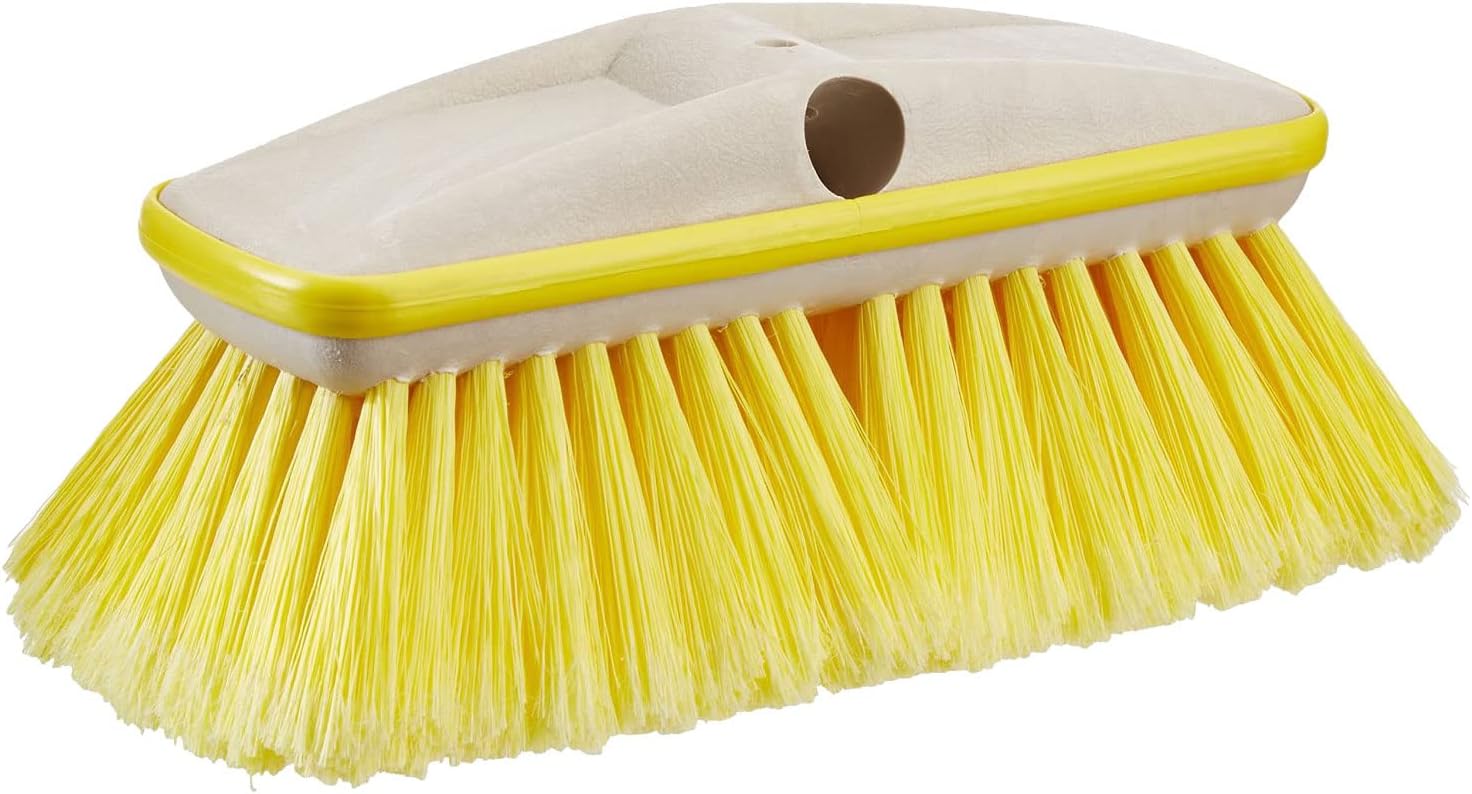
Star brite identifies model 40170 as an eight-inch soft brush with a synthetic wood block and bumper protection. Its published features include flagged fiber ends and compatibility with the maker’s Extend-A-Brush handle system, giving you a specific construction and connection arrangement to verify against the equipment you already have.
The manufacturer makes claims about the block resisting cracking, warping, and splitting, but this comparison does not independently measure those outcomes. Treat the synthetic block as a documented material choice rather than a guaranteed service life, especially when storage, cleaning chemicals, impacts, and the individual brush’s condition can all affect what happens in use.
Consider this model when you want that particular block construction and an appropriate compatible handle for suitable routine washing. The tradeoff is that a brush head alone does not complete the tool, so confirm whether your listing includes only the head and whether a separate handle or approved adapter changes the purchase you are evaluating.

Deluxe 40161: for its documented dual connections
Star brite identifies the Deluxe soft eight-inch brush with bumper as model 40161 and describes compatibility with standard three-quarter-inch threaded handles as well as its Extend-A-Brush handles. That explicit connection information makes it a useful candidate when the handle you own is threaded and you want to investigate a direct compatible arrangement.
The publisher describes Star prene fibers, a synthetic block, and a wraparound protective bumper for the Deluxe model. Those details explain the intended construction, but neither the bumper nor the soft bristles can guarantee a scratch-free result if abrasive dirt remains in the brush or the tool contacts an unsuitable finish.
Consider this model when its verified connection options suit your existing handle and the owner’s cleaning method permits the brush. Do not assume a matching-looking thread is enough if the actual handle or adapter instructions say otherwise, and do not force a connection that resists merely because the nominal size sounds familiar.


Compare the exact soft variants
Check the product number, stiffness wording, and selected marketplace variant together, because the same brush families include medium and stiff versions. Similar head shapes and a shared brand name can make a photograph look reassuring even when the selected option is a different tool from the soft model you intended to buy.
Keep the eight-inch head size connected to your real cleaning area and storage space rather than treating a larger number as automatic progress. A broad head may suit an open surface, while a crowded cockpit can require more controlled access around fittings, and you should not lean or overreach to make a brush cover an area safely.
Compare the completed tool with the handle attached, including comfortable reach and room to stow it without obstructing essential access. A brush that fits the cleaning task but cannot be secured sensibly aboard can become another loose object, so the purchase decision should include where the tool will live between uses.
Inspect the connection before the first wash
Assemble the head and handle through the actual manufacturer’s instructions and check that the intended locking or threaded arrangement is properly engaged. A connection that feels loose or uncertain needs an answer before use, because a detached head beside a boat can create a retrieval problem without telling you why the tool separated.
Inspect the head, bumper, bristles, and connection for damage or trapped debris before bringing it near the boat’s finish. A new package is a reason to check condition, not proof that the tool is clean, and a brush used on a gritty or contaminated surface should not silently become the brush for a more delicate area.
Try the owner’s approved cleaning method in an inconspicuous suitable area where appropriate, following the surface maker’s guidance. This is a compatibility check for your actual arrangement, rather than an invitation to invent a destructive test or declare the entire boat safe for scrubbing after one small area appears unchanged.

Let the cleaning method do its proper share
Use the cleaner, dilution, dwell time, and rinse process specified for the actual surface and product, instead of asking the brush to compensate for an unsuitable chemical choice. This comparison does not rank cleaning solutions, and an effective method on a different owner’s gelcoat should not be copied blindly onto your boat’s paint or other finish.
Keep pressure controlled and avoid contacting the surface with the block or other hard parts, particularly around corners and fittings. The bumper is a protective feature, but it does not remove the need to watch the tool’s orientation or justify pushing into a place where you cannot see which part of the head is touching.
Follow the marina’s washing rules and consider runoff before introducing any cleaning product beside the water. A tool sold for boat care does not determine whether the chosen chemical or method is appropriate at your berth, and a larger cleaning task may be better arranged in a suitable shore-side location.
Clean and store the brush as part of the job
Rinse and care for the brush through its manufacturer’s instructions after use, keeping removed grit and residue from becoming the starting condition for the next wash. Let the tool dry appropriately and store it securely so the bristles, bumper, and connection can be inspected again without unpacking a wet pile of unrelated equipment.
Label or otherwise organize separate cleaning tools by their actual use when the owner wants that distinction, without covering essential product identification. A brush used for one dirty area should not be mistaken for the tool reserved for a sensitive finish, and a clear storage arrangement can preserve that difference more reliably than memory.
Choose the Premium model for its stated synthetic wood block and compatible system, or investigate the Deluxe when its documented dual connections better suit your handle. If the surface instructions call for another tool, follow them and skip both; the useful purchase is a suitable complete washing tool, not a universal promise that soft bristles can clean everything aboard.
Photograph the model number and the connection on the tool you already own before ordering a replacement head. That gives the seller a concrete compatibility question and helps you avoid buying an adapter for an assumed handle family, while the visible product identity remains more reliable than remembering that the old pole was the yellow one.
Sources & scope
Exact sources checked October 22, 2026. The examples and organization are original editorial guidance; follow the official information, actual equipment instructions and qualified advice appropriate to your boat. No hands-on product testing or owner credentials are claimed.