A paper logbook works best when its pages match the kind of information you actually want to find later. Maintenance records and trip notes overlap, but they answer different questions, so the most useful purchase may be the book with the right layout rather than the one with the most impressive nautical cover.
This comparison focuses on three useful formats: Weems and Plath’s The Ship’s Log, model 797, and The Cruising Log, model 798, plus the Rite in the Rain No. 373 notebook for a custom maintenance record. You can compare their documented purposes without pretending that any of them has been tested aboard here, or that a paper book by itself satisfies every recordkeeping requirement applicable to a particular vessel or operation.
Name the record you want to retrieve
Imagine the next question you will ask the book before choosing a layout. Finding the part number used during a repair is a different task from remembering who came aboard during an afternoon sail, and a useful log makes the important answer easy to find without requiring you to reread an entire season’s narrative.
List a few representative entries on ordinary paper, including the date, boat or equipment identity, observation, action, and any follow-up you would need. This small exercise exposes whether you want structured maintenance fields, open narrative space, or two separate records that cross-reference each other when a trip reveals an equipment problem.
Keep operational obligations separate from personal preference and confirm any applicable recordkeeping requirements through the appropriate authority or professional guidance. A product description can explain a book’s printed sections, but it cannot establish that your eventual entries will satisfy a legal, commercial, insurance, or service requirement specific to your situation.
Rite in the Rain No. 373: for your own maintenance layout
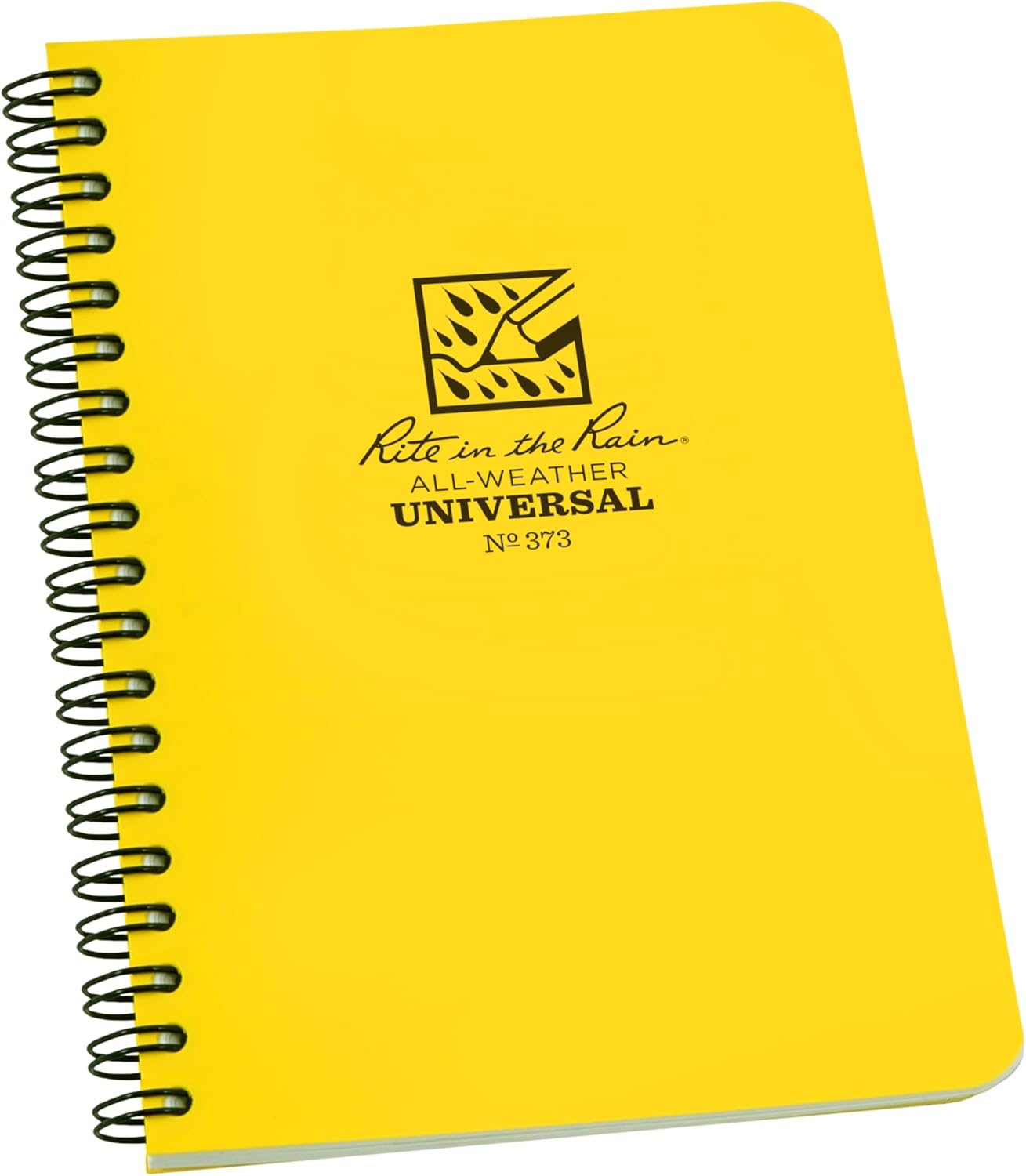
Rite in the Rain identifies No. 373 as a yellow side-spiral notebook with its Universal page pattern and all-weather paper. It is a general notebook, not a preprinted boat-maintenance log, which is precisely the distinction to consider when you want to create your own equipment names, inspection fields, and follow-up columns.
The manufacturer lists sixty-four pages and a Wire-O binding, while the page pattern leaves the organization to you. Consider this option when a smaller custom record suits your routine, but recognize the tradeoff: you must create and maintain the index and fields instead of relying on a publisher to prompt each entry.
Use a writing instrument appropriate to the paper through the maker’s instructions, and practice a sample entry before relying on the arrangement. Weather-resistant paper does not supply accurate information or a complete maintenance system, and you should still protect your only record rather than turning the notebook’s product claims into an independent immersion guarantee.
The Ship’s Log: for a diary-style account of outings
Weems and Plath describes model 797 as a diary-style book with lined pages for ship data and activities, along with a guest register, vessel specifications, and serial-number pages. This makes it the more relevant candidate when you want a continuing account of outings and the people or events associated with them.
The publisher describes the same general flat-opening spiral format and flexible waterproof cover material for this book. Because the broad format overlaps with The Cruising Log, your main comparison should be the page organization and the information you want to retrieve, rather than inventing a durability advantage between similar constructions without testing them.
Consider this model when you enjoy a narrative trip record and want the published supporting sections that accompany it. The limitation is that a repair mentioned inside a long outing entry can be harder to retrieve later unless you add a consistent index or a reference to a separate maintenance record.


The Cruising Log: for excursion-focused records
Weems and Plath describes model 798 as providing space for excursion data and vessel information, together with a guest registry and reference pages. Its emphasis gives you another option when your trip record benefits from the publisher’s cruising arrangement rather than the freer diary-style approach described for The Ship’s Log.
Compare the publisher’s sample pages with a realistic outing entry before choosing between the two Weems books. You are deciding which prompts help you record the details you care about, rather than assuming a difference in title establishes better durability or that reference pages replace current navigation information and proper instruction.
Consider this model when an excursion-focused record suits the way you summarize trips, keeping equipment faults connected to a separate actionable maintenance entry. The publisher describes a flat-opening spiral format and flexible waterproof cover material, but that cover claim should not be expanded into a guarantee for every page, ink, or inserted document.


Check the physical writing and storage arrangement
Use the current publisher dimensions and the actual destination listing to confirm that the book will fit your intended chart-table or storage location. Weems and Plath presents slightly inconsistent dimensions, while Rite in the Rain distinguishes sheet size from the wider bound notebook, so confirm exact closed-book fit if a narrow compartment makes a small difference important.
Make a simple paper outline of the closed book and check the room needed when it is open, including space for your writing hand. A book can fit a locker and still be awkward to use on a small surface, particularly if opening it means moving the working chart or blocking access to another item.
Decide where the pen and any related documents will live without assuming the book includes every accessory pictured elsewhere in the product family. Weems and Plath offers a separate cover designed for its own logs, and you should distinguish a standalone logbook listing from an optional cover or bundle before comparing the complete cost and storage size.
Test a maintenance entry before committing
Write a practice repair entry that separates the observation, diagnosis if established, work performed, exact part identity, and follow-up. You should be able to tell whether a problem was merely noticed, investigated, or actually corrected, because those states can become dangerously blurred when a short note says only that an item was handled.
Include units and reference points for useful measurements, and identify the manual or service document that informed a task where appropriate. A remembered number becomes much easier to reuse when you know what it measured, while a copied setting without model or revision context may be inappropriate for a later replacement or a different piece of equipment.
Keep invoices, photographs, and detailed manuals in a separate organized archive when they would overload the book, then record a reference that lets you find them. The log can be the index to a larger history without becoming a swollen collection of loose papers that hides the next blank page or prevents the cover from closing.

Give trip notes their own useful rhythm
For a personal trip entry, record the date, people, broad outing, relevant conditions, and observations you want to remember without waiting until the details disappear. Use ordinary language and identify uncertainty, because a concise honest note is more useful than a polished account that quietly invents an exact time or condition from memory.
If an outing reveals a maintenance issue, place an actionable entry in the maintenance system as well as any narrative mention. A pleasant diary paragraph about the sail should not be the only place someone must search to discover that the radio did not power on or that a line showed damage needing attention before the next departure.
Keep the act of writing separate from a task that requires full attention aboard, and follow the skipper’s directions about when and where to make notes. A non-electric book avoids a charging requirement, but it still occupies your eyes and hands and should not distract you from safe movement or an assigned role.
Choose one purpose or maintain two clear records
Choose the Rite in the Rain notebook when you want to create your own maintenance layout, The Ship’s Log for its diary approach, or The Cruising Log for its excursion-focused arrangement. If you maintain separate records, cross-reference a trip issue to its equipment entry rather than leaving incomplete fragments in several places.
Protect the book from routine spray and wet storage through an appropriate document arrangement, even when its maker describes weather-resistant paper or waterproof cover material. You still need to consider the pages, ink, inserted papers, and the individual book’s condition, and this comparison provides no immersion test to support leaving your only record exposed in the cockpit.
Recheck the exact title, model, and included items before ordering, then keep the record simple enough that you will continue it. A logbook’s real value comes from clear dated entries you can retrieve, and the right printed layout helps that habit without writing the history of the boat for you.
If another person will maintain the records, show them one completed sample before you settle on the format. A clear convention for dates, equipment names, and follow-up status helps two people write entries that can be read together, while an attractive blank book cannot resolve inconsistent naming or an assumption that the other person recorded the repair.
Sources & scope
Exact sources checked October 22, 2026. The examples and organization are original editorial guidance; follow the official information, actual equipment instructions and qualified advice appropriate to your boat. No hands-on product testing or owner credentials are claimed.