Compact binoculars can help you observe a distant landmark or shoreline detail during a daylight outing, but the right pair still has to fit your eyes and hands. You can compare dimensions on a page, then discover that the eyecups, hinge range, or focus control matter more than the small difference in listed weight.
This shortlist compares three non-stabilized eight-power models: Nikon’s Trailblazer II eight-by-twenty-five, Vortex’s Vanquish eight-by-twenty-six, and Pentax’s AD eight-by-twenty-five WP. It is a manufacturer-specification comparison for occasional daylight observation, not a hands-on optical ranking, a low-light test, or a replacement for the lookout, charts, and navigation equipment appropriate to your boat.
Decide what compact observation means for you
Describe where the binoculars will live and how you expect to use them before choosing a product. A pair kept in a small day bag for occasional shoreline viewing has a different storage problem from a pair left ready at the helm, and the useful definition of compact includes the case and access arrangement you actually need.
Think about your ability to hold a view steady on a moving boat without promising yourself that a particular magnification solves motion. All three shortlisted models use eight-power magnification, but none is an image-stabilized design, so you still need a secure position and a realistic expectation of what you can observe comfortably in the conditions.
Ask the skipper when it is appropriate to use binoculars and where you can do so without blocking movement or distracting someone with a handling task. The extra detail can be useful, but staring through a narrow view should not replace broader awareness or become a reason to stand in an insecure place for a better angle.
Nikon Trailblazer II: distinguish the current model clearly
The Trailblazer II eight-by-twenty-five is a particular Nikon model, rather than another name for the older Trailblazer ATB. Nikon lists eight-power magnification, twenty-five-millimeter objectives, and a roof-prism arrangement for the current II, so check the exact product name instead of mixing figures from a familiar older listing.
Nikon’s listed specifications include a real field of view of eight-point-three degrees and eye relief of ten millimeters. Those are documented comparison points, not an independent judgment that the view is better, and the eye-relief figure especially deserves an actual fit check if you wear glasses while observing.
Consider this model when its stated viewing field and folding compact format match your priorities, subject to a comfortable personal trial. The practical tradeoff is that a compact package and a wide stated field do not guarantee that you can see the full field with your own eyes, eyeglasses, and preferred eyecup position.

Vortex Vanquish: compare the specific eight-power version
The Vanquish eight-by-twenty-six uses a reverse-Porro arrangement, and Vortex identifies the eight-power model as VNQ-0826. Keep that identity separate from the ten-power option in the same family, because an apparently similar product image can lead to a different magnification and a different set of specifications if you change variants.
Vortex lists eye relief of fifteen millimeters and a real field of view of six-point-seven degrees for this model. Compared with the Nikon’s published figures, that gives you a different specification balance to investigate, while stopping short of a claim that the longer listed eye relief automatically guarantees a good fit for every glasses wearer.
Consider the Vanquish when its control layout, eyecup arrangement, and stated eye-relief specification make it a promising fit candidate. Its listed dimensions and weight differ from the Nikon’s, so check the whole package in your intended storage place rather than assuming two compact eight-power binoculars occupy the same space in a bag.


Pentax AD eight-by-twenty-five WP: another eye-relief tradeoff
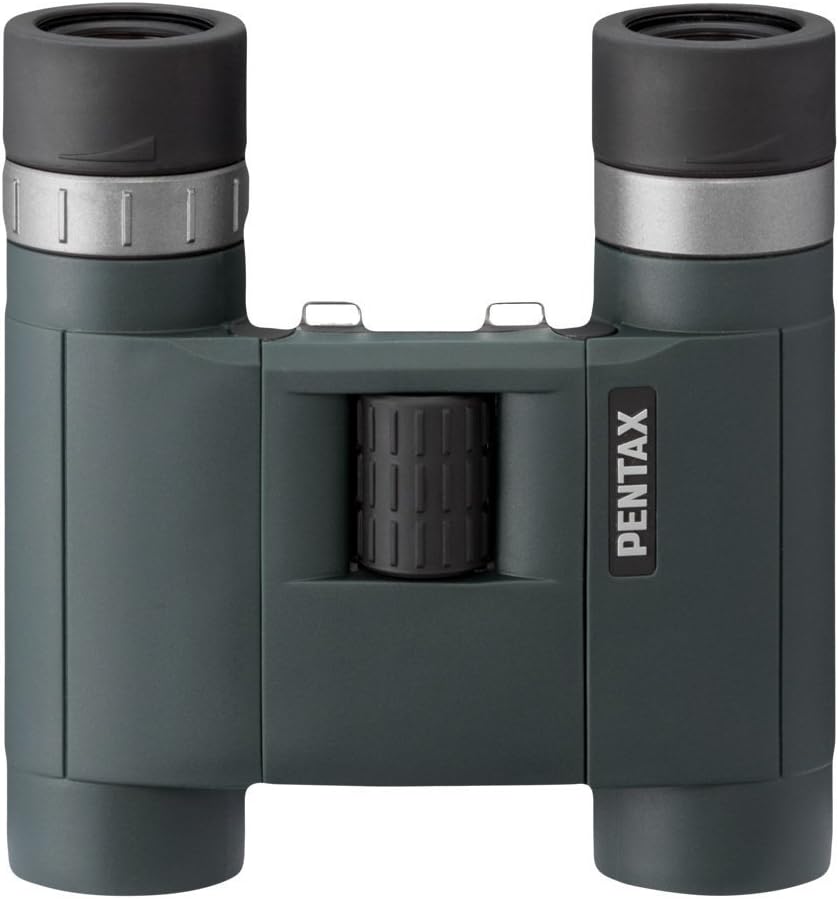
Ricoh identifies the Pentax AD eight-by-twenty-five WP as model 62881 and lists a roof-prism design with twenty-one millimeters of eye relief. That longer published figure gives you another fit candidate to investigate, especially with glasses, while remaining a specification to test rather than a guarantee about your particular face and frames.
The same manufacturer table lists a real angular field of five-point-five degrees, narrower than the other two published figures in this comparison. You can weigh that documented tradeoff against the eye-relief specification without assuming either number establishes overall optical quality or how comfortable you will find the view during an actual safe try-on.
Check that the destination is the AD eight-power model, because the product family includes a ten-power option and Pentax also sells a differently named UP range. Similar initials and objective sizes do not make those products interchangeable, and the linked marketplace title calls its color green while the maker lists black, so verify the model and actual color rather than assuming every field agrees.

Compare specifications through the same question
Keep field of view in the same units when comparing the products and do not mix angular figures with distances at different viewing ranges. A manufacturer’s feet-at-a-thousand-yards figure and another maker’s meters-at-a-thousand-meters figure need a consistent comparison, while the listed angular field gives you a direct starting point here.
Treat objective size as one design input instead of using the one-millimeter difference to predict a visible advantage you have not tested. Optical coatings, construction, fit, viewing conditions, and your own eyes all affect the experience, so this comparison does not turn a small diameter difference into a low-light or sharpness ranking.
Write down the specifications that address your own question, such as eye relief for glasses or dimensions for a particular locker. A long table of every available figure can obscure the decision, and the most useful comparison is the one that tells you which model deserves a personal fit check before purchase.
Check the view with your own eyes
When you can try the binoculars, adjust the spacing and focus through the exact manufacturer’s instructions and use an ordinary safe distant subject. You should seek a comfortable single view without forcing the hinges or assuming that another person’s preferred setting will be appropriate for your eye spacing and vision.
Test with the glasses you expect to wear aboard, using the product’s eyecup arrangement as instructed, and notice whether you can see the useful field comfortably. A specification can identify a potential concern, but it cannot tell you whether a particular frame, lens position, or facial shape will work with the eyepiece in practice.
Check that you can reach the focus control without squeezing the barrels into an uncomfortable position, then consider the same movement with the handwear you might use. Keep the trial stationary and safe, because a dockside fit exercise should not require you to lean over water or follow a moving boat while concentrating on unfamiliar controls.

Separate weather protection from underwater use
All three manufacturers describe weather-protection features for these models, but you should read the current instructions and limits rather than treating waterproof as unlimited permission to immerse them. This article provides no independent sealing test, and a protective rating does not establish the condition of a used pair with unknown impacts, repairs, or damaged seals.
Use the maker’s cleaning instructions for the lenses and exterior after a salty outing, keeping abrasive grit and unsuitable cleaning materials away from optical surfaces. A general boat brush or shared maintenance cloth is not an appropriate automatic choice for a lens simply because it happened to remove salt from a different object aboard.
Arrange secure storage with the skipper and keep straps from becoming loose loops around working equipment or walking routes. A compact pair is still an object that can fall or snag, so the choice of where it lives and how it is handled matters alongside the shape and mass of the binocular itself.
Buy the fit rather than an invented score
Put the Nikon first on your try-on list if its wider published angular field and compact design address your priorities, investigate the Vortex when its eye relief and different layout look more promising, or consider the Pentax when its longer listed eye relief makes it a useful candidate. If none produces a comfortable view, continue looking rather than forcing your eyes to adapt to a shortlist.
Recheck the exact model, magnification, variant, included accessories, and seller details at the destination before purchasing, especially when a marketplace groups similar versions together. You want the product whose specifications you compared, not a bundle or older model selected because its title begins with the same familiar brand and family name.
Keep the outcome modest: a pair that fits your eyes, hands, storage space, and daylight observation needs is a useful choice. Your own safe fit trial can support that decision, while navigation, lookout practice, and the skipper’s judgment remain essential parts of the outing regardless of which binoculars you carry.
If two people will share the binoculars, practice resetting the permitted eye-spacing and focus adjustments through the instructions rather than leaving one person’s setup as the default for everyone. You can keep a short note of the arrangement each person finds comfortable, while still checking the view afresh instead of assuming a remembered mark guarantees correct adjustment.
Sources & scope
Exact sources checked October 22, 2026. The examples and organization are original editorial guidance; follow the official information, actual equipment instructions and qualified advice appropriate to your boat. No hands-on product testing or owner credentials are claimed.